

Sacred: wall-mounted reliefs that explore memory and form

Above: Installation view of Passion in Orange, 1240 x 415 x 65mm. Photo: Jono Everett
Jono Everett’s solo exhibition 'Sacred' showed at Straitjacket Art Gallery in Newcastle 6–28 June, 2026. We asked him about the nature and significance of the works presented.
What does the title of the exhibition, Sacred, relate to?
I have spent the last few years taking on the glamour role of pulling out discarded chairs from the rubbish piles of Newcastle. I find abandoned chairs on the footpath, in a bleak carpark, sinking into overgrown grass in a soggy field. I collect these chairs not as furniture, but as evidence. Once functional, once intimate, these objects performed the critical role of holding bodies – in conversation, for love or for solitude. These important memories are embedded in these objects and each one worthy of being saved, its materials treasured and reimagined into these artworks.
Often chairs I find are so rich in character (whether the quirky design or the distressed marks of years of love) I simply can’t take them apart. I now can see, unfortunately for my co-studio members, that I have inadvertently become a chair collector. They are all sacred.
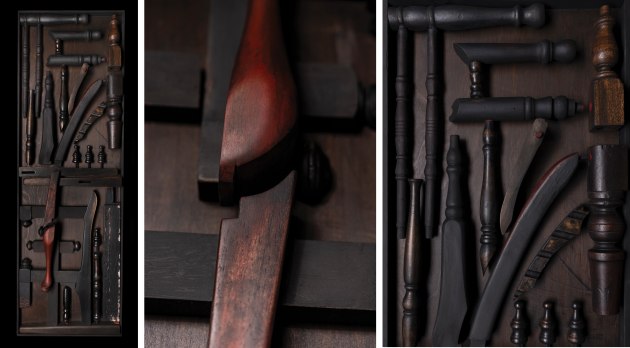
Disconnected, 1240 x 410 x100mm. Photo: Edwina Richards Photography
What are the works included?
Sacred is a solo exhibition comprising eight wall assemblages, each constructed from salvaged chair components. The works sit somewhere between sculpture and painting – assembled as wall-mounted reliefs that explore memory, material and form.
In your artist’s talk you said you start these works with one line and an emotion. Can you elaborate on that?
When I design – whether a sculpture or a furniture piece – I always begin with a very loose sketch. These drawings are quick, instinctive and entirely for myself. They aren't presentation drawings; they’re simply a way of capturing an emotion, a rhythm or a movement.
Sometimes a single line is enough. That line becomes an anchor point from which the design evolves. Although the sketches are often simple, they're an essential step in translating something intangible into a physical object
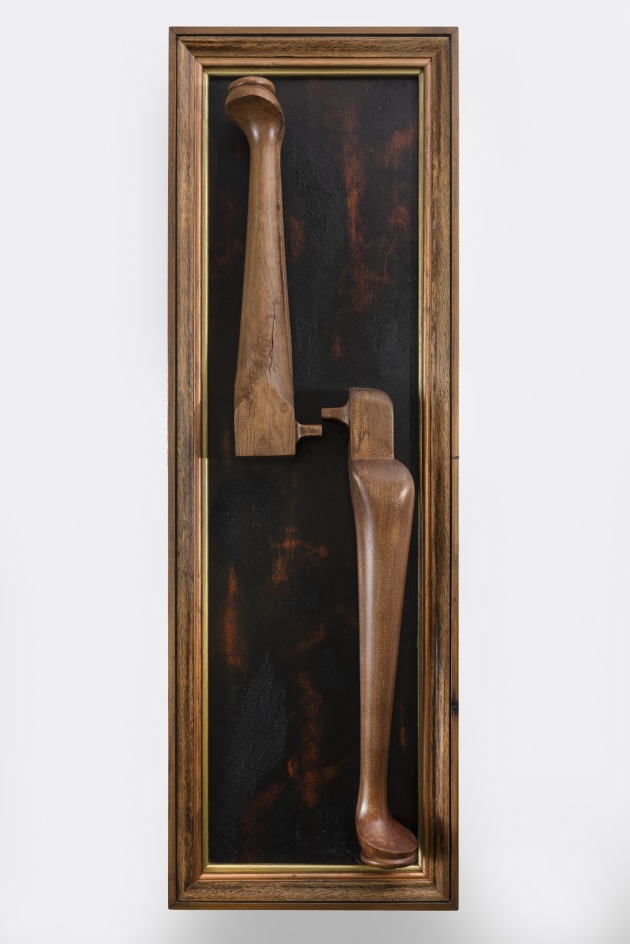
How baby chairs are made, 820 x 270 x 100mm. Photo: Edwina Richards Photography
You talk about ‘moments’ when you’re making one of these pieces. What does that mean?
‘Moments’, as I like to think of them, arrive constantly in a woodworker’s life. They happen by chance: an offcut left on the tablesaw; a half-cut joint revealing an unexpected negative space; a discarded component in the scrap bin describing a perfect arc.
They’re accidental discoveries that present an idea and an opportunity. Some are so refined that I often wonder whether, if I’d deliberately tried to make them, if I could. Creating these artworks from hundreds of chair parts produces an endless series of these moments. The challenge isn’t finding possibilities – it’s deciding which ones work.
How are these pieces constructed?
To make a piece, I spread dozens of chair components across the workshop floor and begin assembling small sections. I make, unmake and remake these arrangements repeatedly, moving pieces backwards and forwards until relationships begin to emerge. Once resolved, I photograph everything before disassembling it.
Each component is then individually treated using torching, ebonising, inks, homemade stains and commercial finishes, creating a monochromatic palette and a singularity in the composition.
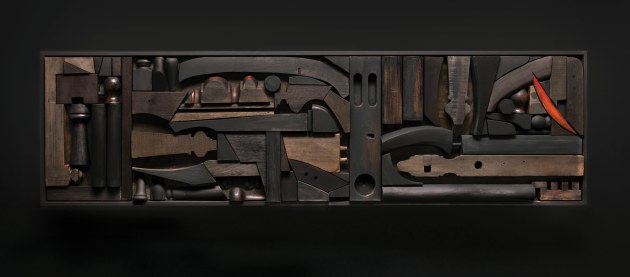
Anatomy of a chair, 1245 x 335 x 75mm. Photo: Edwina Richards Photography
What kind of joinery is involved in piecing these together? Can you tell us about the process and how involved it is.
I try to keep each component as true to its original form as possible, while incorporating small interlocking joints, loose tenons and concealed fixings to connect the elements to one another and to the backing panel. Wherever possible I reuse the chair’s original dowel holes, mortises, screw holes and existing joinery.
Each work takes around four weeks to make. This is a passion and an exorcizing of concepts I’ve carried around over many years – definitely for love – not for money.
Can you tell us about the resource? What’s behind the idea of repurposing discarded furniture?
The work began as an attempt to rescue these beautiful, poetic objects from landfill and transform them into artworks with new purpose and meaning.
Over time I’ve come to appreciate what an extraordinary resource discarded chairs are. Cedar, maple, ash and oak, already shaped, turned and carved, ready-made forms.
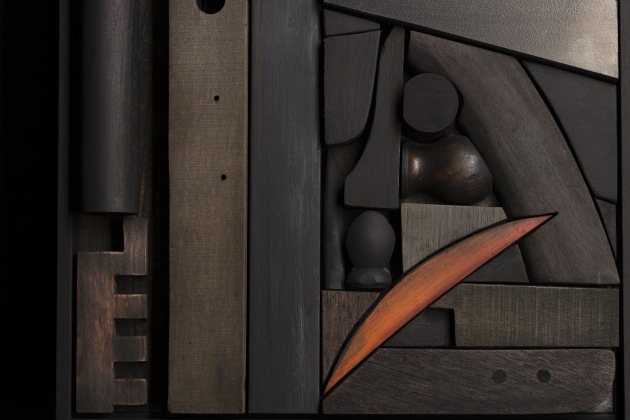
Anatomy of a chair (detail), 1245 x 335 x 75mm. Photo: Edwina Richards Photography
How did idea for creating these works come about?
The seven metre long Morphology sculptural work was fabricated for the Newcastle 2024 New Annual Festival. It grew from this idea of using reclaimed furniture while presenting an opportunity for an audience to get their hands dirty and be directly engaged in one of the festival’s programs – while the teaching people some rudimentary woodwork and sculptural skills. The experience revealed just how expressive these discarded chair components could be. Since then, I’ve been taking a deeper dive, creating increasingly personal works that investigate themes of rage, love, yearning and loss.
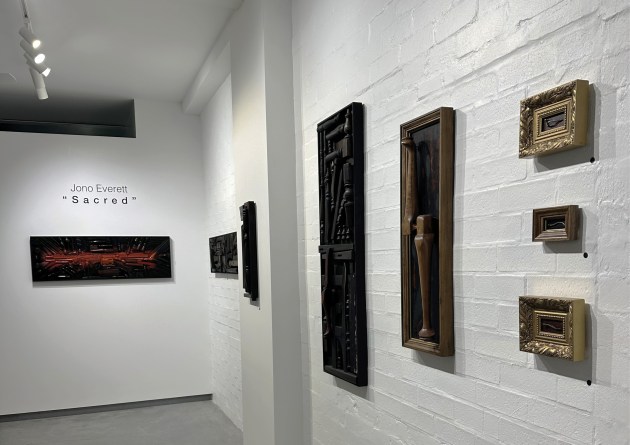
Installation view at Straitjacket Art Gallery, Newcastle. Photo: Jono Everett
Is this a new direction in your work?
Furniture design and making will always be my first love and how I make my living. Sacred at Straitjacket Art Gallery, Newcastle, and The Quiet Room exhibition coming up 22 August, 2026 at Singleton Arts + Cultural Centre represent an expansion of my practice rather than a departure from it.
I am a furniture designer maker and at the same time dismantling chairs for my art but I see them as two sides of the same practice. Both demand emotional intelligence, design thinking, problem solving and craftsmanship. My furniture and my artworks are simply different conversations using the same material language.
From 8 August, The Quiet Room will show some of the works from Sacred, along with the large-scale sculpture Morphology as well as other new works. The exhibition will be lit as an ambient, meditative space, accompanied by a written soundtrack.
Learn more about Jono Everett @everettcreative at www.everettcreative.com.au